The wall behind a master bed sets the room’s visual rhythm. It can feel calm, dramatic, or unexpectedly personal. The best choice depends on the room’s scale, light, and the pieces you already love. Interior designer Nate Berkus has said, “Your home should tell the story of who you are, and be a collection of what you love.” That idea offers a useful guide: choose decor that feels connected to your life, not merely matched to a trend.
When considering How to decorate the wall behind a master bed, start with the bed’s width and the height of the ceiling. A wide upholstered headboard may need only one quiet piece of art above it. In a smaller room, a pale textile or a softly framed print can add interest without crowding the space. Picture warm wood, linen bedding, and a landscape with muted green tones. Small details matter. A mirror can brighten a dim corner, but its placement should feel comfortable from the bed.
There is no single perfect answer. A symmetrical gallery may look polished, yet still feel a little cold. Try paper templates before hanging anything, and view them from the doorway and pillows. Then pause. The wall should support rest, not compete with it. This guide will explore art, color, texture, lighting, and scale, while leaving room for personal taste—and a few thoughtful changes along the way.
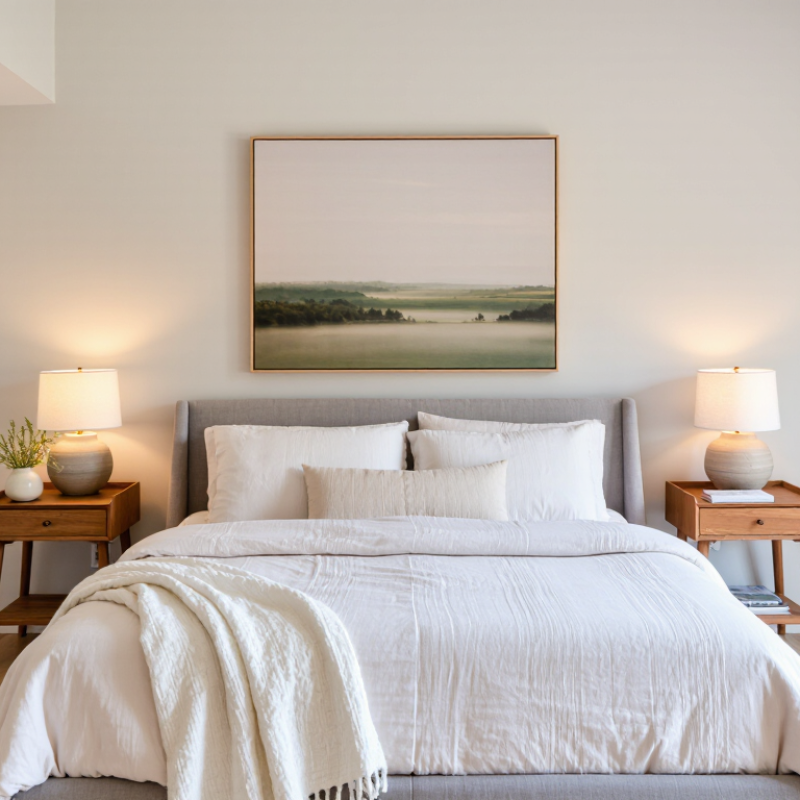
The best wall decor starts with the bed, not the empty wall. The International Sleep Products Association’s mattress-size reference lists a queen at 60 by 80 inches and a king at 76 by 80 inches. That width changes the visual balance. Measure the mattress and frame, then include any bedside tables when judging the wall’s usable span. A small print centered over a king can look lost. A crowded gallery can make a narrow room feel tighter.
Headboard height matters just as much. Measure from the floor to its top, then leave a visible gap before the artwork; around 6 to 10 inches is a practical starting point, not a fixed rule. For a tall upholstered headboard, choose a slimmer piece or let the headboard remain the focal point. For a low frame, a wider artwork can give the bed more presence. Houzz’s 2024 U.S. Bedroom Trends Study tracks homeowner choices in bedroom renovations, a useful reminder that real rooms—not idealized layouts—set the limits. I still misjudge this sometimes. Tape the proposed artwork’s outline on the wall for a day. Check it from the doorway and from the pillow. Then adjust for lamps, sloped ceilings, and the actual wall area.
A dependable starting point is to make the artwork above a master bed about two-thirds to three-quarters of the bed’s width. For a 60-inch-wide bed, that means a piece roughly 40 to 45 inches wide. Measure the mattress or bed frame, then use the wider frame measurement if it extends beyond the mattress. Small details matter.
Hang the artwork so its lower edge sits about 6 to 10 inches above the headboard. This keeps the piece visually connected to the bed without making the wall feel crowded. If you prefer several prints, measure the full arrangement, including the gaps, as one unit. A pair of 20-inch frames with a 3-inch gap spans 43 inches. That can suit a queen bed nicely.
These proportions are useful guidelines, not strict rules. In rooms with tall ceilings, a slightly larger piece may feel more balanced; a low headboard may call for less vertical space. I have seen carefully measured art still look oddly small when the wall is very wide. Step back and check the view from the doorway, not just from the bed. A paper template taped to the wall helps, though it can look convincing until you see the real frame. Height and width both shape the result.
Design guideline: choose artwork about ⅔–¾ as wide as the bed.
Ranges are calculated from common U.S. mattress widths: Twin 38 in, Full 54 in, Queen 60 in, King 76 in, and California King 72 in. Measure the complete artwork, including its frame.
What Is the Best Wall Decor Behind a Master Bed?
Set the Artwork Center Near the 57-Inch Gallery Hanging Standard
A strong choice is one large artwork or a balanced pair, centered above the bed. The Smithsonian Institution’s gallery-hanging guidance uses 57 inches (145 cm) from the floor to the artwork’s center. Treat that as a reference, not a strict bedroom rule. Measure from the floor, then check how the art relates to the headboard. A tall headboard may make the standard feel too low.
Keep a visible gap between the headboard and frame, often around 6 to 8 inches. For a wide bed, choose art that spans roughly two-thirds of the bed’s width. This proportion helps the display feel connected without overpowering the room. The 57-inch rule is imperfect; furniture height and ceiling lines can change what looks right. Trust the wall, too.
Tips: Use painter’s tape to mark the artwork’s outline. Stand at the doorway and check the centerline before hanging. If the frame looks crowded, raise the mock-up slightly. A small adjustment can matter.
| Planning Dimension | Practical Guideline | Example or Calculation | How to Apply It |
|---|---|---|---|
| Artwork center height | Use about 57 inches from the floor to the center of the artwork as a general gallery-hanging reference. | For artwork 24 inches tall, a 57-inch center puts its bottom edge at about 45 inches from the floor. | Treat 57 inches as a starting point, not a fixed rule. The headboard and viewing position may call for a higher placement. |
| Artwork width relative to bed | A common visual guideline is to choose artwork or a grouping about two-thirds to three-quarters the width of the bed. | For a 60-inch-wide queen bed, aim for approximately 40–45 inches of total artwork width. | Measure the complete arrangement, including the gaps between multiple pieces. |
| Full bed reference | A standard full mattress is 54 inches wide; two-thirds to three-quarters of that width is about 36–41 inches. | Suitable total width: approximately 36–41 inches. | Check the actual bed frame width, since a frame may be wider than the mattress. |
| Queen bed reference | A standard queen mattress is 60 inches wide; two-thirds to three-quarters of that width is about 40–45 inches. | Suitable total width: approximately 40–45 inches. | Center the artwork over the bed, rather than over the entire wall, unless the layout clearly calls for another focal point. |
| King bed reference | A standard king mattress is 76 inches wide; two-thirds to three-quarters of that width is about 51–57 inches. | Suitable total width: approximately 51–57 inches. | For a wide bed, one large piece or a balanced multi-piece grouping can help the wall feel proportionate. |
| California king reference | A standard California king mattress is 72 inches wide; two-thirds to three-quarters of that width is 48–54 inches. | Suitable total width: approximately 48–54 inches. | Use the mattress or frame measurement that best matches the visible width of the bed in the room. |
| Clearance above the headboard | Leave roughly 6–10 inches between the top of the headboard and the bottom of the artwork as a practical starting range. | With a 48-inch-high headboard, the artwork bottom might sit around 54–58 inches from the floor. | Measure from the top of the headboard to the artwork’s lowest edge. Adjust for the artwork’s height and the room’s proportions. |
| Combining the height guidelines | Prioritize a comfortable, visually connected placement over forcing both the 57-inch center and headboard clearance to match exactly. | If the artwork is 24 inches tall and its bottom is 54 inches above the floor, its center is 66 inches above the floor. | When the headboard is tall, the correct clearance may place the art center above the 57-inch reference. |
| Multiple-piece arrangement | Keep the grouping visually unified, with consistent spacing between pieces. | For a two-piece arrangement, measure the full outside-to-outside width and the center of the overall grouping. | Plan the arrangement on paper or with removable templates before making holes in the wall. |
| Measurement note | Mattress dimensions are standard nominal sizes. Bed frames, headboards, artwork frames, ceiling height, and room layout vary, so measure the actual pieces and wall before hanging. | ||
Choosing wall decor above a master bed starts with scale. A single artwork should span roughly two-thirds to three-quarters of the bed’s width, leaving visible wall at both sides. Hang it low enough to feel connected to the headboard, but not so low that pillows brush the frame. Check the view from the doorway and from the bed. A large mirror can brighten a dim room, though reflective surfaces may feel distracting at night. Secure heavy mirrors with hardware rated for their weight, anchored into studs or suitable wall supports.
Panels add depth without relying on glass. Upholstered or wood panels can soften sound and create a clear backdrop, but their edges should sit firmly against the wall. Avoid bulky pieces that could loosen above the sleeping area. Textiles bring warmth and are lighter than framed art, yet they need secure mounting and regular dusting. A loose tapestry can sag over time. It happens. Art offers the most flexibility: choose one substantial piece or a balanced group, and use sturdy picture hangers rather than small adhesive strips for heavier frames.
Measure before buying. For a queen bed, a narrow print can look oddly stranded, while an oversized arrangement may crowd bedside lamps. Leave enough clearance for headboard movement and wall-mounted reading lights. If you rent or cannot locate studs, choose lightweight decor and confirm that the mounting method suits both the wall surface and the object. I once preferred a mirror for its brightness, then found its nighttime reflections unsettling; personal comfort matters as much as proportion.
Behind a master bed, decor should feel secure before it feels dramatic. Check the wall type and locate studs before hanging anything heavy; drywall anchors must suit the weight. Keep frames well above pillows, where a bumped head or shifting bedding is less likely to cause trouble. Small details matter. If you rent, lightweight pieces and removable hanging systems may be easier to manage, but always check their stated load limits.
Choose materials for the room, not only for the photograph. Framed prints, sealed wood panels, and fabric art can all work, though fabric may collect dust and need occasional cleaning. In a humid bedroom, avoid materials that can warp unless they are properly sealed. Matte surfaces often feel calmer than glossy ones under bedside lamps. Still, matching every finish can make a room feel too planned; one slightly different texture may look more natural.
Lighting changes how wall decor reads at night. A pair of adjustable sconces can highlight artwork while leaving bedside surfaces free, but position them to avoid glare from glass. Picture lights add focus, though their wiring and mounting need careful planning. Use warm, comfortable light and test it from the bed before settling on a height. The first arrangement may not feel right. Move a paper template around the wall before drilling, and live with the placement for a day.
Aim for about two-thirds to three-quarters of the bed’s width. For a 60-inch bed, choose artwork roughly 40 to 45 inches wide.
Leave about 6 to 10 inches between the headboard and the artwork’s lower edge. Keep pillows from brushing the frame.
Around 57 inches from the floor is a useful reference. A tall headboard may make that height feel too low, so adjust as needed.
Measure the whole arrangement, including gaps. Two 20-inch frames with a 3-inch gap span 43 inches.
Yes. Mirrors can brighten a dim room, while panels add depth and textiles bring warmth. Consider how each material feels above the bed.
Tape a paper outline to the wall, then check it from the bed and doorway. The real frame may look different. It happens.
A slightly larger piece may balance a tall room. Wide walls can still make carefully sized artwork look small. Trust your eye.
Use hardware suited to the object’s weight and wall. Secure heavy mirrors and frames to studs or appropriate wall supports. Lightweight decor may suit rental walls better.
How to decorate the wall behind a master bed starts with looking at the bed, headboard, and available wall space as a whole. A tall headboard may call for a simpler, lower-profile display, while a broad, open wall can support a larger focal point. As a useful design guideline, choose artwork or a grouped arrangement that spans roughly two-thirds to three-quarters of the bed’s width, so it feels balanced rather than undersized or overwhelming.
For a comfortable viewing position, place the artwork’s center near the 57-inch gallery-hanging standard, adjusting as needed for the headboard and room layout. Consider art, mirrors, decorative panels, or textiles, weighing their visual scale alongside stability and safety above the bed. Secure each piece with mounting suited to its weight and wall surface, and choose materials that work well in bedroom conditions. Thoughtful lighting can add warmth and highlight the display without making the wall feel cluttered.

Q-Flow Home